
The Project
About Circular Vision 2.0
Circular Vision 2.0 is an EU-funded research and innovation project with the University of Copenhagen and its spin-out company Phi Diagnostics collaborating on advancing circular DNA-based technology for the early detection of pancreatic- and other hard to detect cancers.
Building on the scientific discoveries and technological developments of the preceding EU-funded Circular Vision project, Circular Vision 2.0 represents the next step in applying pioneering circular DNA research into clinically relevant diagnostic solutions.
Our ambition is to bridge the gap between laboratory research and clinical application by advancing the technology, validating its diagnostic potential, and preparing it for future commercialization.
Our objective
Circular Vision 2.0 focuses on developing the technology into a reliable and scalable diagnostic platform through four key objectives:
1. Technology Development
Optimizing our protocol for circular DNA purification from blood plasma and tumor tissue, while improving sequencing and computational analysis to increase the robustness and scalability of the diagnostic workflow.
2. Clinical Validation
Evaluating the technology using clinical samples from approximately 1,000 individuals to assess its potential for pancreatic cancer screening and prognosis.
3. Diagnostic Software Development
Developing and refining machine-learning-based classification tools capable of identifying cancer-associated patterns in circular DNA profiles.
4. Commercialization and Regulatory Preparation
Establishing the foundations for future clinical adoption by preparing the regulatory pathway under the EU In Vitro Diagnostic Regulation (IVDR), developing a commercialization strategy, and exploring opportunities for clinical and industry partnerships.
Supported by the European Innovation Council
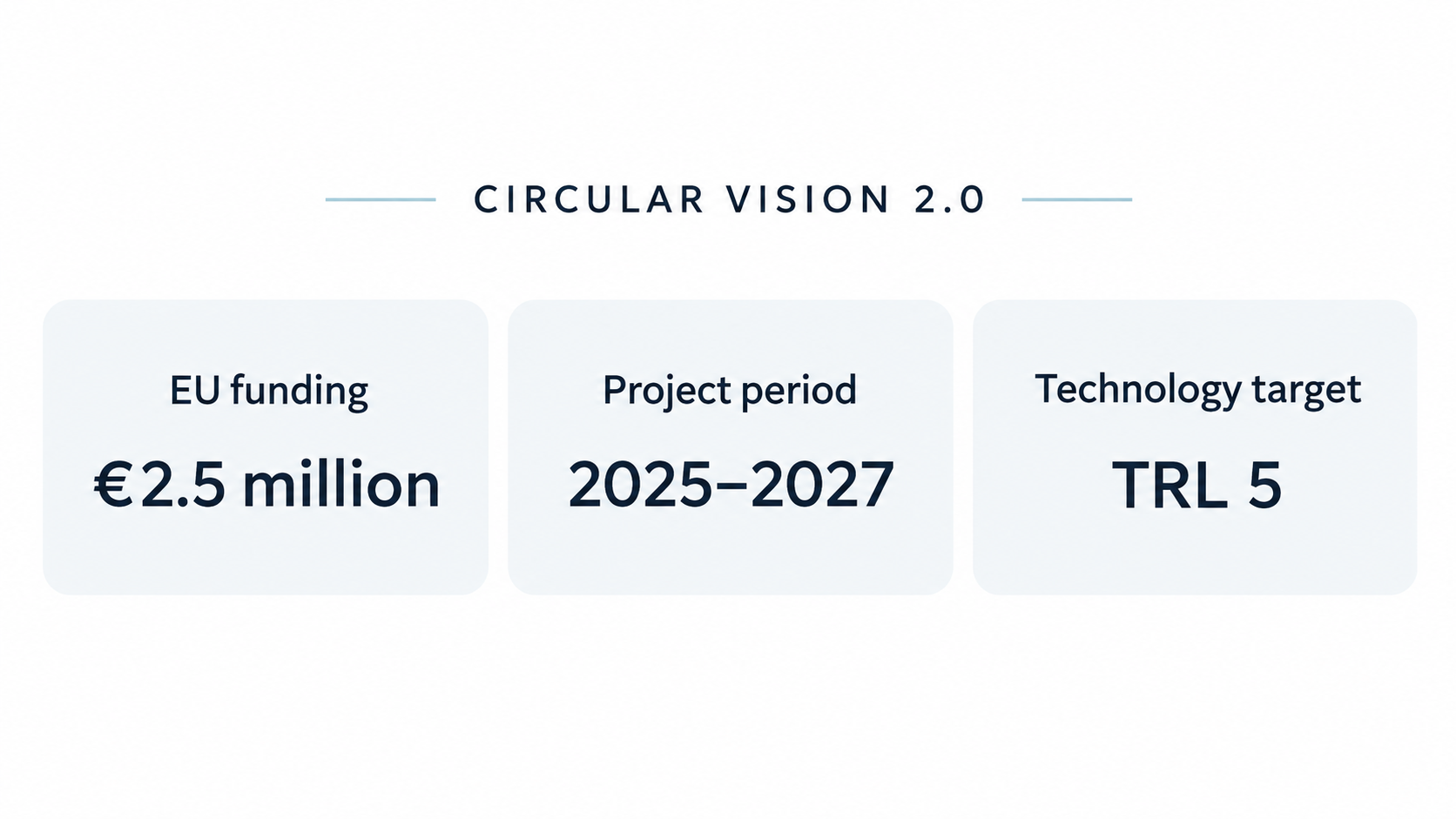
Circular Vision 2.0 is the first University of Copenhagen affiliated project to receive the EIC-Transition grant, of approximately €2.5 million.
EIC Transition supports promising scientific breakthroughs in their journey from laboratory discoveries towards real world applications, helping researchers and innovative companies mature their technologies, validate their potential, and prepare for commercialization.
Circular Vision 2.0 was selected as one of just 40 projects from 390 eligible applications in the highly competitive 2024 EIC Transition funding round.
This support enables us to build on years of pioneering research and take important steps towards bringing circular DNA-based diagnostics closer to clinical application.
Our Partners
University of Copenhagen
The University of Copenhagen coordinates Circular Vision 2.0 and provides scientific expertise underpinning technology. Building on pioneering research in circular DNA biology, the university contributes to the continued development and validation of molecular and computational methods.
Phi Diagnostics
Phi Diagnostics, formerly CARE-DNA IP, is a University of Copenhagen spinout dedicated to translating circular DNA research into clinically relevant diagnostic solutions.
As the project's industry partner, Phi Diagnostics contributes to technology development, commercialization planning, and the preparation of the diagnostic platform for future clinical and market applications.
Together, the University of Copenhagen and Phi Diagnostics combine scientific expertise and entrepreneurial innovation to advance a new generation of cancer diagnostics.